
Swollen toes, redness of the skin, and intense itching or even pain. There is a good chance you are suffering from chilblains. Fortunately, there is something you can do about it!
What are chilblains?
The name says it all. Chilblains occur most frequently in the period between spring and autumn. During these cold and damp autumn months, your protruding body parts that are poorly supplied with blood, such as hands, Your toes, ears, and nose are often exposed to harsh weather. Cold conducts particularly well in areas where the air is humid and windy. It is therefore logical that we in the Netherlands frequently suffer from chilblains. But what exactly are chilblains? Due to temperature changes, for example by moving from outside to inside – where it is warm – your small blood vessels automatically dilate and constrict to retain heat in your skin. Those suffering from chilblains have a disrupted mechanism. The large vessels in your middle skin layer – the dermis – constrict, but the small capillaries suddenly behave in the opposite way: they start to dilate. Blood flow is impaired, causing congestion or a lack of oxygen in the skin. The result is slightly damaged or inflamed blood vessels. Your skin turns blue, red, or purple, swells up, and starts to itch or even hurt. Your feet is not in optimal condition.
How do you prevent chilblains?
Chilblains can be hereditary. If family members suffer from them, there is a high chance that you will develop them yourself. Hormones or the use of certain medications, such as beta-blockers, can also play a role. You can prevent chilblains by wearing good shoes that do not pinch. It is also important to keep your feet moving, for example by exercising, to wear thick woolen socks, and to properly heat rooms where you spend extended periods of time.
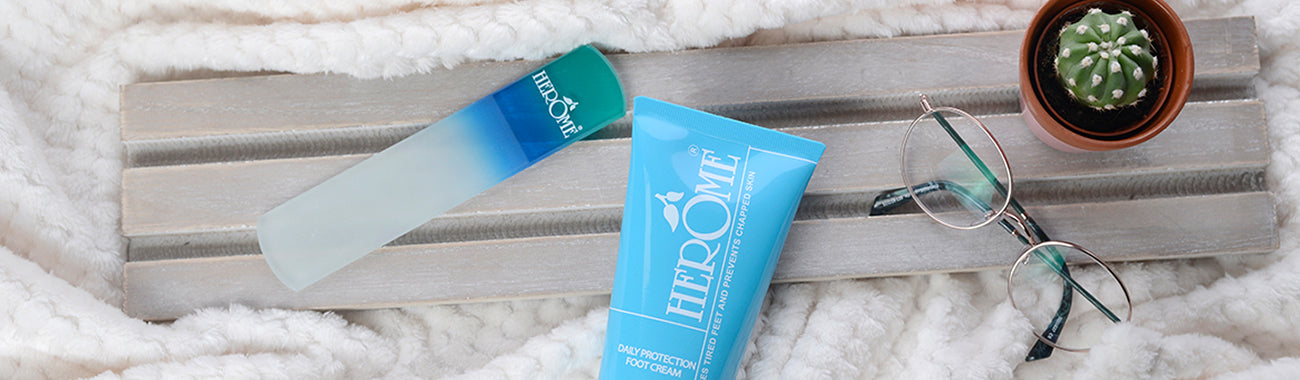
If you do end up with chilblains, it is important to pay attention to your feet. For example, by applying a thick layer of foot cream every day. Chapped Skin Foot Cream Contains nourishing ingredients that help repair damaged and dry skin. It soothes your skin, but more importantly: it stimulates your blood circulation.
Daily Protection Foot Cream It has a cooling and soothing effect, perfect for those areas that are swollen or damaged. The added menthol has a cooling and soothing effect and reduces itching and pain.
Tips for chilblains
- Limit the rapid transition between cold and heat. As soon as your feet warm up too quickly, swelling increases, which in turn causes more itching and pain. So don't do this: plunge straight into a hot bath. Do this instead: let your feet warm up slowly.
- Do not go to sleep with socks on. Besides the fact that it does not help with chilblains, it is not hygienic. Your feet cannot breathe enough and start to sweat, leading to fungal infections, eczema, or gorges lurk.
- Try not to scratch. Before you know it, you will cut your skin open, resulting in wounds, infections, or bacteria.